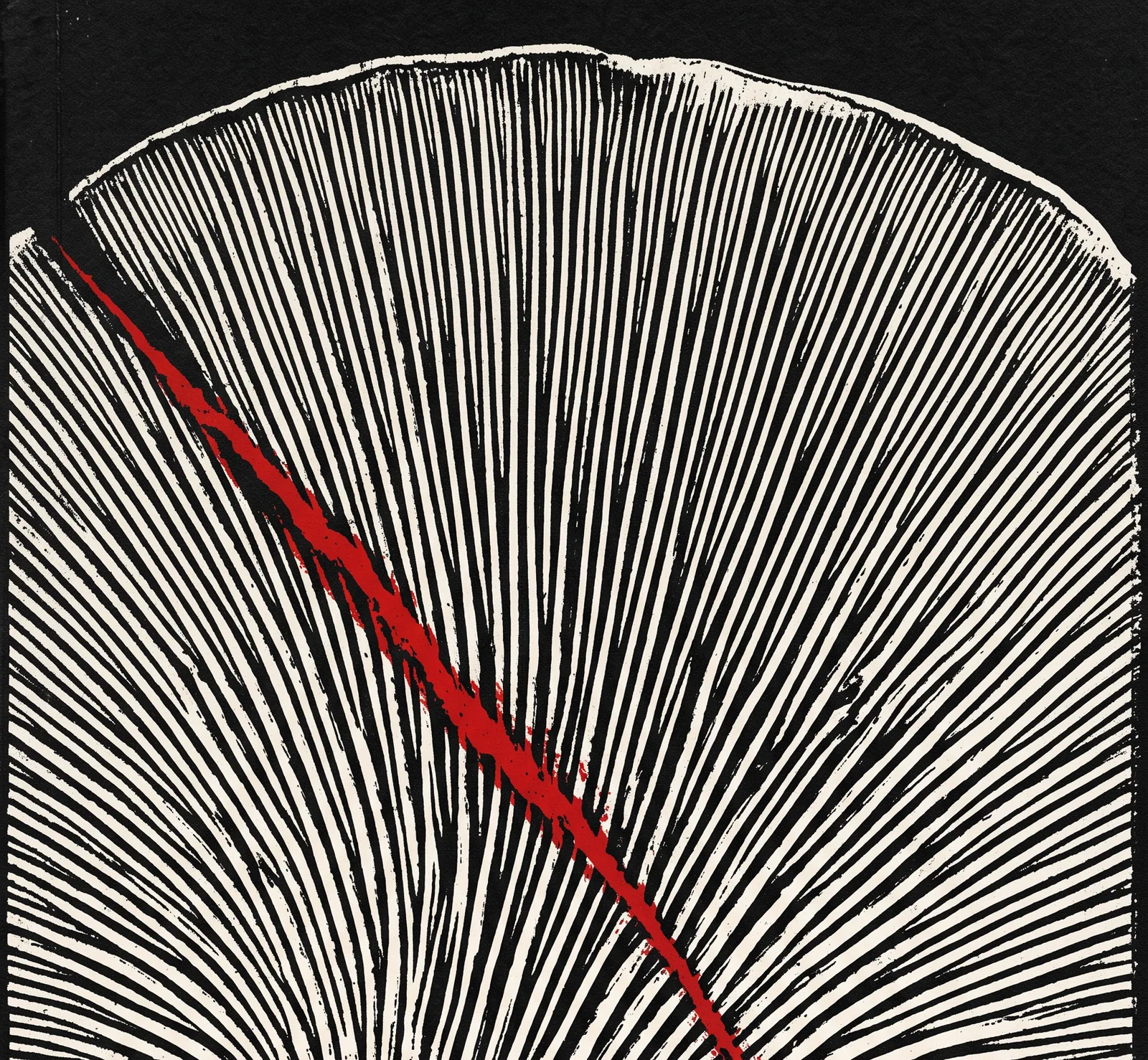
The target
Warm, self-deprecating, emotionally generous. She interprets attention as safety until her body starts speaking a language she does not want to hear.
Madison Jae
A psychological thriller
Isla drinks things she does not want because the alternative is hurting someone who's trying. This time, someone is counting on it.
Karen remembers Isla's coffee order after hearing it once. She memorises her fears. She arrives every Tuesday with homemade broth. She texts to check in — once, twice, fourteen times a day.
Isla has a word for this: love.
Karen has a word for it too. In a locked leather journal, written in ink — because pencil can be erased — she logs dosages in milligrams, maps symptoms to a ten-month timeline, and notes that Isla will interpret surveillance as care and isolation as intimacy. Prognosis: Excellent.
When the metallic taste begins in week six, right on schedule, Isla blames the Portland rain. Karen adjusts the recipe.
Jeanette, the childhood friend who introduced them, watches from the outside. She can see the hollowing of her best friend. But seeing the decay and proving the cause are two different things.
And Karen has been counting on that, too.
I catalogued sixty-three facts about Isla Chevalier before she hugged me. The ring she twists on her right hand, mother's, not her own. The half-second she holds on too long when she hugs. People who tip forty per cent are people who need to be liked by everyone in the room.
Jeanette Marshall was supposed to be the one. I joined her book club, learned her schedule. Four months of careful friendship. But the daughter of an alcoholic monitors at a frequency no protocol could survive. She was too observant to use. So she introduced me to her best friend instead.
I keep a cabinet behind a panel that doesn't look like a cabinet. A journal that begins Day 1. A mushroom called Angel's Wing I harvest before dawn.
By October, there is a metallic taste on Isla's tongue. By Thanksgiving, she cannot hold a fork. On Tuesdays, I am at her kitchen counter with broth, staying late.
I touched her hair while she slept, and it came out in my hand. I put the strands in my pocket.
Karen remembers Isla's coffee order after hearing it once. She brings soup, supplements, honey, thermoses, keys, routines, and explanations. Every act looks like devotion until the pattern becomes too precise to be kindness.
Karen's private language
Warm, self-deprecating, emotionally generous. She interprets attention as safety until her body starts speaking a language she does not want to hear.
Clinical, exacting, terrifyingly sincere. She does not think she is disguising violence as care. She thinks the care and the violence are the same motion.
Practical, guilty, trained by childhood to count what others miss. She can see the decay. Proving it is the part that almost costs everything.
September to January: ordinary kindness curdles into a pattern Isla cannot name fast enough.
Exhibit A
Exact wine. Correct chocolate. Home cooking. Fourteen check-ins a day. The site of horror is not a basement or a chase scene. It is a mason jar with a heart on the label.
Exhibit B
Metallic taste, vertigo, exhaustion, lost words, a fork dropped at Thanksgiving. Isla's symptoms are warnings before they are evidence.
Exhibit C
Jeanette's fear becomes timestamps, gloves, containers, lab notes, and the terrible discipline of proving what she already knows.
I take the cup and drink something I don't want because the alternative is hurting someone who's trying. I have never once in my life been able to do that.
Chapter 1: Isla
Extracto. Where the friendship begins, and where grief learns to sit at another table.
Division Street. Three blocks between independence and access.
Apartment kitchens. Where soup, labels, errands, and care become impossible to read cleanly.
New Year's ice. When the bridges close and east and west Portland become separate cities, the friend with a key no longer needs anyone's permission.
Official updates
Get publication news, cover reveals, sample chapters, and launch announcements for Angel's Wing.